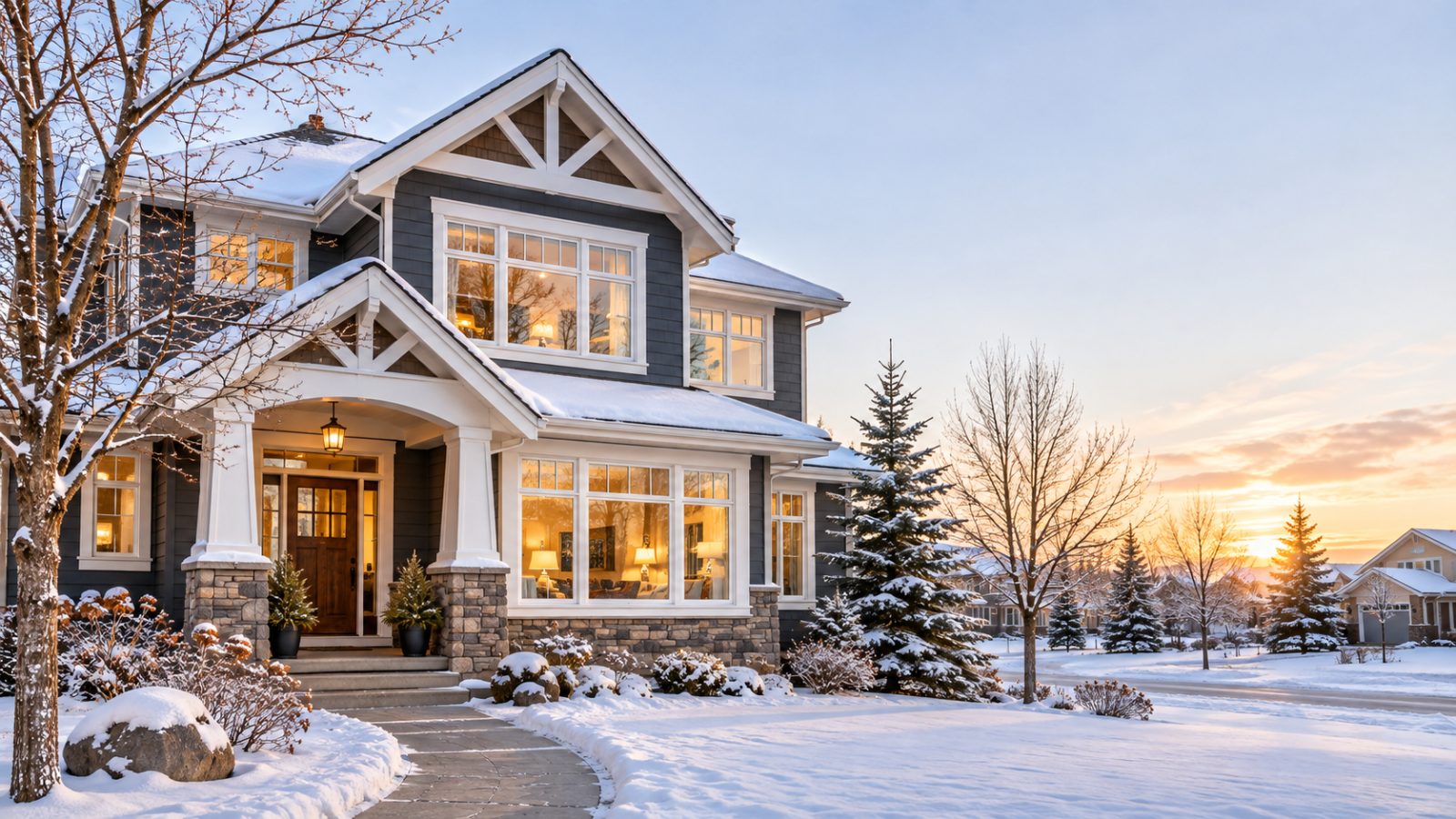
Welcome Home in Comfort
Entry Door Replacement in Sherwood Park
Explore options for your front or side entrance. Get a Free Estimate
Your exterior entry door is used throughout the year, often several times each day. When it becomes difficult to close, develops gaps around the edges or allows cold air into the hallway, replacing it may improve both comfort and convenience.
A new entry door can also update the appearance of your property. Door materials, glazing, panel designs, hardware and frame finishes provide opportunities to suit the architectural character of your home.
We accept requests for residential entry door replacement and help arrange direct contact with a local contractor who can evaluate the existing entrance.
Choosing an entry door involves balancing insulation, appearance, operation and weather resistance. The surrounding frame and threshold deserve just as much attention as the visible door panel. Consider how the entrance is exposed and how your household uses it before selecting replacement features.
Steel and fibreglass exterior doors are commonly available with insulating cores. Their appearance, maintenance needs and resistance to everyday wear vary according to the specific construction and finish. Wood doors offer a distinctive appearance but generally require greater attention to protection and maintenance. The suitability of a door material depends partly on exposure to sunlight, rain and temperature changes. A sheltered entrance beneath a porch has different conditions from a doorway facing open weather. Ask the contractor how the proposed material and finish are intended to perform in your particular location.
Installing a new door panel into an existing frame may be possible when the retained components are compatible and remain in good condition. However, an entrance with damaged jambs, deteriorated weatherstripping or an uneven threshold may require a more comprehensive replacement approach. A complete door assembly provides an opportunity to address the perimeter and establish a suitable fit between the panel and frame. The contractor should inspect the existing construction and explain what will be retained, removed or restored. Interior casing and exterior trim requirements should form part of that conversation.
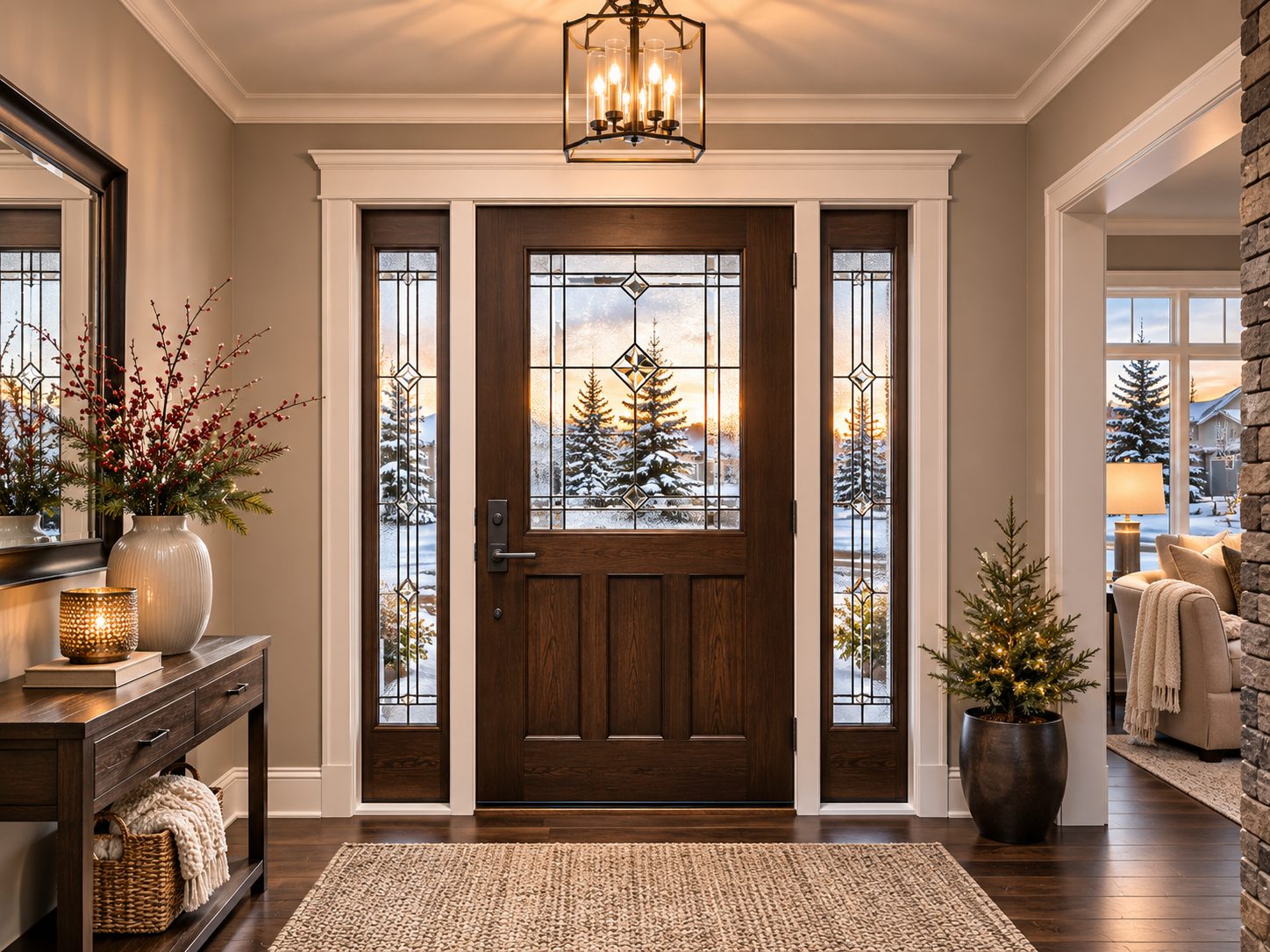
Glazed door panels and sidelights can bring daylight into a hallway that otherwise feels dark. Available designs range from largely solid doors with small glass inserts to entrances incorporating more extensive decorative glazing. Privacy, insulation and applicable safety glass requirements all deserve consideration. Think about how the entrance is viewed from the street and neighbouring properties. Textured or obscure glass may provide a useful balance between daylight and privacy. Where sidelights are retained or replaced, their condition and connection to the door assembly should be considered alongside the main door.
Effective perimeter seals help reduce unwanted air movement when the door is closed. Weatherstripping needs to make consistent contact without preventing normal operation. The bottom seal and threshold must also accommodate daily traffic and the conditions immediately outside the entrance. If you notice frost near the lower corners, water staining or cold air across the hallway floor, point out those areas during the assessment. Such symptoms can involve the door fit, indoor humidity or surrounding construction. A replacement plan should address identified problems rather than focusing exclusively on the appearance of the door panel.
Handles, deadbolts, hinges and related hardware influence the usability of an exterior entrance. Lever handles may suit household members who find traditional knobs difficult to grip. The chosen hardware also needs to be compatible with the door construction and available clearances. Discuss preferences for key-operated or compatible electronic locking systems before the assembly is ordered. If household accessibility is important, consider passage width, threshold height and the direction of door swing. Changes to an entrance should account for applicable building requirements as well as personal convenience.
Tell us whether warmth, easier operation, additional daylight or a different exterior appearance is most important.
The contractor can examine the panel, jambs, seals, threshold and adjacent finishes.
Discuss material, glass, colour and hardware requirements as part of the proposed product specification.
Plan an exterior entry door that suits the appearance of your home and the way your household comes and goes.
Free — no obligations
Describe the existing exterior door and any problems with operation, drafts or surrounding materials.
The contractor considers frame dimensions, door swing, exterior exposure and threshold conditions.
Choose a compatible material, glass arrangement, finish and hardware specification.
Establish installation details, finishing responsibilities and scheduling directly with the contractor.
Retention may be possible if the sidelights and supporting assembly are sound and compatible with the replacement. The contractor can determine whether keeping them would affect fit, sealing or finishing.
Temperature changes, moisture, hardware wear and movement in the surrounding structure can affect alignment. Inspecting the frame and door together helps identify the underlying problem.
Both materials can be suitable depending on their construction, finish and exposure limits. Compare complete product specifications and maintenance requirements rather than relying on the material name alone.
Replacement provides an opportunity to select a different available finish. Confirm manufacturer limitations, especially for entrances exposed to substantial direct sunlight.